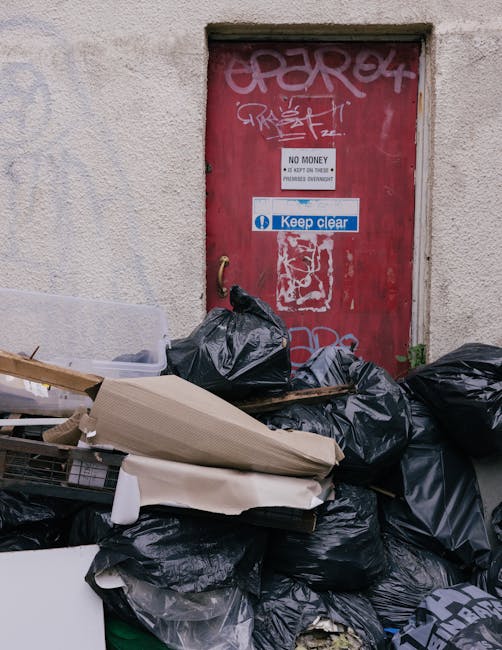
Common access problems moving bulky rubbish from Maida Vale flats
If you have ever tried to get a broken wardrobe, a heavy sofa, or a pile of renovation waste out of a Maida Vale flat, you will know the real issue is often not the rubbish itself. It is the access. Narrow stairwells, awkward corners, tight front halls, shared entrances, parking pressure, and old-fashioned London layouts can turn a simple clearance into a slow, sweaty, mildly frustrating job. That is exactly why understanding the common access problems moving bulky rubbish from Maida Vale flats matters before you start lifting anything. This guide walks through the practical barriers, how removals usually work in real homes, and the sensible ways to avoid damage, delays, and unnecessary stress.
Maida Vale has plenty of elegant period conversions and mansion blocks, which is lovely until you try to move a mattress down a staircase that seems designed by someone with a grudge. Truth be told, a lot of clearance headaches are predictable. Once you know what to look for, you can plan properly, keep people safe, and make the whole thing far less painful.
Contents
- Why access problems matter
- How bulky rubbish removal from flats works
- Key benefits and practical advantages
- Who this is for and when it makes sense
- Step-by-step guidance
- Expert tips for better results
- Common mistakes to avoid
- Tools, resources and recommendations
- Law, compliance, standards, and best practice
- Options and comparison table
- Real-world example
- Practical checklist
- Conclusion
- Frequently asked questions
Why Common access problems moving bulky rubbish from Maida Vale flats Matters
Access problems shape almost every part of a flat clearance. They affect how long the job takes, how many people are needed, whether items can be removed safely, and whether walls, banisters, flooring, or communal areas stay intact. In a neighbourhood like Maida Vale, where flats may sit above shops, in converted terraces, or in larger apartment blocks, the route out can be more complicated than the waste itself.
Bulky rubbish is awkward by nature. Old beds, wardrobes, desks, white goods, and broken shelving do not bend, and they rarely cooperate. If the route out is narrow or shared, every turn becomes a decision point. A small mistake can mean chipped paint, a dented door frame, or a sofa stuck halfway down the stairs. Nobody wants that awkward moment where three people are quietly trying to reverse a wardrobe while pretending everything is fine.
It also matters because access issues can affect the cost and the plan. A collection that looks straightforward online can become more involved once you factor in walk-up floors, no lift access, controlled entry, permit constraints, or limited loading space. That does not mean the job is impossible. It just means good preparation is doing a lot of the heavy lifting before the actual lifting starts.
For many residents, the biggest concern is not speed but certainty. Will the item fit through the hallway? Will the stairwell be wide enough? Is parking close enough for a quick load? These are sensible questions. They deserve proper answers.
If the clearance is part of a wider move, refurbishment, or downsizing project, it can also be useful to look at a broader flat clearance service or even a wider home clearance approach, especially where several rooms need clearing in one visit.
How Common access problems moving bulky rubbish from Maida Vale flats Works
In practice, moving bulky rubbish from a flat usually follows a simple pattern: assess the access, protect the route, remove the items, load them safely, and clear the area. The part that makes or breaks the day is the access assessment. You need to know not just how big the item is, but how it behaves on stairs, around corners, and through shared areas.
A good assessment normally starts with a few key checks:
- How wide are the internal doors and stair turns?
- Is there a lift, and if so, is it large enough for the item?
- Are there tight corridors, low ceilings, or awkward bends?
- How far is the parking spot or loading point from the front door?
- Are there time limits, entry codes, or concierge rules?
- Will neighbours, building management, or residents need notice?
That last point is easy to overlook. In shared buildings, a clearance is not happening in a vacuum. People are coming and going, the front entrance may be busy, and someone will inevitably choose that exact minute to bring in shopping or a pushchair. Not ideal, but it happens.
From there, the team will usually decide whether the item can be carried in one piece or whether it needs to be dismantled first. Some furniture simply has to come apart to get out cleanly. That is normal. A careful dismantle is often safer than forcing a heavy object through a tight space and hoping for the best.
Packaging and protection are the next layer. Floors may be covered, corners protected, and door frames shielded. In buildings with polished communal flooring or narrow painted walls, this matters a lot. One bump can leave a visible mark, and in a smaller block everybody notices.
Finally, items are moved in a planned sequence. Heavy items go first or last depending on the route and crew setup. Smaller items may be used to clear the path. If there is any doubt about safe handling, the job slows down. That is not inefficiency. That is sensible work.
If access looks especially awkward because of furniture size or shape, it can help to review a dedicated furniture clearance or furniture disposal option before the day arrives.
Key Benefits and Practical Advantages
Good access planning is not just about avoiding problems. It brings real practical advantages that people notice straight away.
- Less risk of damage. Careful planning protects walls, lifts, bannisters, and shared hallways.
- Faster collection. When the route is known in advance, the team can work without unnecessary stop-start movement.
- Safer handling. Clear access means fewer awkward lifts and fewer risky twists on stairs.
- Lower stress. You are not standing in the hallway wondering whether the item will fit.
- Better scheduling. If parking and entry are sorted, everyone arrives with a realistic plan.
There is also a quieter benefit: better communication with neighbours and building management. A well-run clearance feels considerate. It avoids the sense that someone is dragging half a flat through a shared entrance with no warning. That matters in Maida Vale, where communal living and period buildings often mean close quarters.
Another practical upside is waste separation. When items are assessed properly, it becomes easier to spot what can be reused, recycled, or handled as general bulky waste rather than mixed with other debris. If sustainability is on your mind, it is worth reading about recycling and sustainability practices before booking anything. Small decisions upstream can make the end result cleaner and more efficient.
And yes, the difference between a tidy route and a bad one can be surprisingly large. One missing parking space can add more delay than the actual lift-out. Funny old world.
Who This Is For and When It Makes Sense
This kind of clearance is relevant to more people than you might think. It is not just for landlords and large move-outs.
- Tenants replacing old furniture before the end of a tenancy.
- Homeowners clearing a flat after a refurbishment or room reconfiguration.
- Landlords and agents preparing a property between tenancies.
- Families dealing with inherited items, downsizing, or a sudden space clear-out.
- People moving out of furnished flats who need bulky pieces removed quickly.
- Anyone with limited time who cannot manage multiple trips to the tip or recycling facilities.
It makes sense whenever the item is too large, too heavy, or simply too awkward for a standard bin collection. It also makes sense when the building itself adds friction. A single broken bed frame may be manageable in a ground-floor property. Put that same frame in a top-floor flat with a narrow staircase and no lift, and the story changes fast.
In our experience, people often wait too long to think about the access side. They focus on the item, then discover the route is the real problem on the day. If you are looking at a broader property clear-out, services like house clearance, loft clearance, or even garage clearance may be more appropriate depending on where the bulky items are coming from.
Step-by-Step Guidance
Here is a practical way to approach bulky rubbish removal from a Maida Vale flat without creating a mess of it.
- Measure the items. Note the height, width, and depth of anything bulky. Do not guess. A tape measure takes a minute and can save a lot of bother.
- Check the route out. Look at hallways, doors, corners, stairwells, lifts, and any shared landing space.
- Identify access constraints. Think about parking, loading bays, entry codes, concierge hours, and building rules.
- Decide what may need dismantling. Flat-pack furniture, wardrobes, and bed frames often move more safely when broken down first.
- Clear the path. Remove small items, shoes, mats, plant pots, and anything that might trip someone or snag the load.
- Protect surfaces. Use coverings or padding where walls and flooring could be marked.
- Communicate with the building. If needed, let neighbours or management know when the move is happening.
- Load in the safest order. Bulky items first or last depending on the layout, with the safest route always taking priority.
- Do a final sweep. Check for screws, loose fittings, and small scraps left behind near the route.
A small but useful tip: take a quick photo of awkward areas before collection day. It sounds simple, but it helps you think clearly about pinch points, especially if you are trying to explain the layout to someone else later. A picture can save a lot of back-and-forth.
If the job also involves office furniture, archived materials, or mixed commercial waste from a home workspace, office clearance and business waste removal can be relevant depending on what is actually being removed.
Expert Tips for Better Results
Here are the little things that make a clearance feel smooth instead of chaotic.
- Measure the tightest point, not the easiest one. The hallway may look fine, but the turn by the stairwell could be the real bottleneck.
- Do not leave the route until the last minute. Shoes, bins, folding chairs, and prams can all become obstacles very quickly.
- Plan around building traffic. Early morning or quieter times are often easier for shared entrances.
- Use dismantling thoughtfully. Remove doors, legs, or shelving only when it genuinely helps the move.
- Keep hardware together. Put screws and fixings in a labelled bag. Tiny thing, huge sanity saver later.
- Consider stair grip and posture. Slippery soles or awkward handholds make a bad route worse.
One thing people underestimate is how much communication helps. If a neighbour knows a bulky item is coming through, they are much less likely to step into the route at the worst possible moment with a shopping bag and a puzzled look. It is a simple courtesy, but it changes the mood of the whole job.
Another practical consideration is waste segregation. If you already know certain items are reusable, recyclable, or part of a separate load, tell the team before collection. That helps keep things tidy and may reduce wasted movement. For general disposal and transport planning, the service page for waste removal is a useful reference point.
Common Mistakes to Avoid
Most access problems are not dramatic disasters. They are ordinary oversights that snowball. A few stand out again and again.
- Not measuring properly. Guessing can lead to an item getting stuck halfway through a doorway. That is the kind of moment nobody wants to remember.
- Forgetting about the stair turn. Many people measure the hallway but ignore the corner where the item actually has to pivot.
- Assuming the lift will work. A lift that exists is not the same as a lift that is usable for bulky items.
- Blocking shared spaces. Leaving items in corridors or entrance halls can cause safety and building-management issues.
- Ignoring parking access. If the vehicle cannot get close enough, the move becomes slower and harder on the crew.
- Trying to force a bad fit. If it does not go smoothly, stop. Forcing a large item through a tight route is how damage happens.
To be fair, people often do the best they can with the space they have. But cramped flats are unforgiving. One extra inch at a corner can make all the difference, and there is no prize for "nearly fitting".
A subtler mistake is forgetting the paperwork side. If you are booking a collection for a managed building, some operators or building managers may ask for basic service details, insurance confirmation, or clear timing. That is normal, and it is worth having the information ready. It helps to choose a provider that is open about insurance and safety and clear on terms and conditions.
Tools, Resources and Recommendations
You do not need specialist equipment for every job, but the right basic tools can make access issues much easier to manage.
| Tool or resource | Why it helps | Best used for |
|---|---|---|
| Tape measure | Confirms door widths, item sizes, and awkward turns | Pre-checks before booking |
| Protective blankets or covers | Reduces scratches and knocks on walls or doors | Shared hallways and stairwells |
| Strong gloves | Improves grip and protects hands | Lifting rough or damaged items |
| Trolley or sack truck | Helps move heavier items on flatter routes | Ground-floor or lift-access moves |
| Zip bags for fixings | Keeps dismantled parts together | Furniture disassembly |
| Building access notes | Reduces delays and confusion | Managed flats or concierge properties |
If the bulky rubbish includes furniture in reasonable condition, you may also want to check whether any items should go through a dedicated furniture disposal route rather than being treated as mixed waste. If the job is larger and involves multiple room types, a broader flat clearance can be the more efficient choice.
For readers who like to compare options before deciding, it can help to think in terms of access difficulty, item type, and time pressure. Those three things usually decide the best route more than anything else.
Law, Compliance, Standards, or Best Practice
When moving bulky rubbish from flats, the main compliance concerns are usually safety, property access, and responsible waste handling. You do not need to be a legal specialist to get this right, but it helps to follow normal UK waste and building best practice.
In practical terms, that means:
- keeping communal routes clear and safe during the move;
- using suitable lifting methods and not overloading one person;
- protecting shared surfaces and private property;
- making sure waste is handed to a properly managed disposal route;
- being clear about who is responsible for access, timing, and permissions.
If the property is part of a managed block, the building may also have house rules around loading, lift use, noise, and notice periods. These are not usually complicated, but they do need respecting. The safest approach is simple: ask first, plan early, and keep everything tidy.
Best practice also means being honest about what the job involves. If the access is very poor, it may need more than one person, more time, or partial dismantling. There is no shame in that. In fact, that is usually the sensible answer.
For customers who care about how providers work behind the scenes, pages like health and safety policy, payment and security, and modern slavery statement can be useful trust signals when choosing a service.
Options, Methods, or Comparison Table
There is more than one way to handle bulky rubbish in a flat. The best option depends on the access, the item size, and how quickly you need the space cleared.
| Method | Best for | Pros | Trade-offs |
|---|---|---|---|
| Self-move to local disposal point | Very small loads and easy access | Direct control, simple if the item is light | Time-consuming, physically demanding, parking and transport issues |
| DIY with friends or neighbours | One-off bulky item on a clear route | Flexible and inexpensive if everyone can help | Safety risk, damage risk, coordination can be messy |
| Professional flat clearance | Awkward layouts, multiple bulky items, time-sensitive jobs | Planned access, safer lifting, faster overall | Usually more structured, may need booking and preparation |
| Partial dismantle plus collection | Large furniture or tight staircases | Improves fit through narrow spaces | Needs careful reassembly or fixings kept together |
For many Maida Vale flats, the third option is the easiest. The tighter the building, the more valuable a planned collection becomes. If you are comparing approaches, it is worth looking at pricing and what is included before deciding. A clear starting point is pricing and quotes, which helps you understand the service structure before you commit.
Case Study or Real-World Example
A typical example: a two-bedroom flat in a converted Maida Vale building with a long shared hallway, one narrow staircase, and no lift. The resident needs a broken sofa, a dismantled bed frame, and several old storage units removed before handover. On paper, it sounds straightforward. In reality, the sofa is wider than expected, the stair turn is tight, and the hallway is lined with shoes, plants, and a couple of bikes. A classic London moment, really.
The solution begins with a quick look at measurements and the route. One wardrobe needs to be dismantled before moving. The hallway is cleared in advance. Soft covers are placed at the corners where the wall curves into the stairs. A parking spot is arranged close enough to keep the carry distance short. The team then removes smaller pieces first to free up space, followed by the larger items once the route is clear.
What made the difference was not brute force. It was preparation. The job finished without scuffs, without arguments with neighbours, and without someone having to hold a mattress at a bad angle for ten awkward minutes. That sort of thing is exactly what access planning prevents.
That is the pattern you see again and again. The buildings are not impossible; they just ask for forethought. A bit of care goes a long way.
Practical Checklist
Use this checklist before moving bulky rubbish out of a Maida Vale flat.
- Measure all large items carefully.
- Check doorway widths, stair turns, and lift size.
- Confirm whether any items need dismantling.
- Clear shoes, mats, bikes, and clutter from the route.
- Protect walls, doors, and flooring where needed.
- Arrange parking or loading access in advance.
- Notify building management or neighbours if required.
- Separate reusable items from true waste.
- Keep fixings and small parts together in labelled bags.
- Make sure the collection plan matches the building layout.
If you can answer each item on that list, you are already ahead of most last-minute removals. Honestly, that is half the battle.
Conclusion
The common access problems moving bulky rubbish from Maida Vale flats are usually predictable: narrow staircases, tight corridors, small lifts, shared entrances, parking pressure, and awkward furniture dimensions. Once you treat access as the main planning issue, not an afterthought, the whole job becomes safer, faster, and far less stressful.
The real trick is simple. Measure first, plan the route, protect the building, and do not force bulky items through spaces that are clearly not having it. Whether you are clearing one stubborn sofa or a whole flat full of large items, a thoughtful approach saves time and keeps everyone calmer.
Get a free quote today and see how much you can save.
If you are still deciding what level of clearance you need, it can help to revisit the broader service pages and think about the full picture rather than just the most obvious item. The right plan is usually the one that fits the building as well as the waste.
Frequently Asked Questions
What are the most common access problems in Maida Vale flats?
The most common issues are narrow staircases, tight hallways, awkward corners, limited lift access, and poor parking or loading space close to the building.
Why does access matter so much for bulky rubbish removal?
Because access affects safety, timing, labour, and the chance of damage. A bulky item may be easy to lift in theory but difficult to move through a real building.
Can a sofa or wardrobe usually be removed from a flat without dismantling it?
Sometimes, yes. But in many older or tighter Maida Vale properties, partial dismantling makes the move much safer and reduces the risk of getting stuck.
How do I know if my item will fit through the stairwell?
Measure the item and compare it with the narrowest parts of the route, especially door frames, stair turns, and landings. Do not forget the angle of the turn.
Is lift access always enough for bulky rubbish?
No. A lift may be too small, may have weight limits, or may not allow large items to be carried inside safely. It also depends on building rules.
What should I do before the collection team arrives?
Clear the route, remove small obstacles, measure large items, and make sure any access instructions, entry codes, or parking notes are ready.
Does bulky rubbish removal cost more if access is difficult?
It can, because awkward access may take more time, more careful handling, or more people. The exact price depends on the job and what is included.
Can I leave bulky items in the communal hallway before collection?
It is usually better not to, unless you have permission and it is safe to do so. Shared spaces must stay clear for residents and emergency access.
What if I am not sure whether my building has enough access?
Take photos, measure the tightest points, and describe the layout clearly before booking. That often reveals the likely problem areas straight away.
Are there safety rules I should follow when moving heavy items myself?
Yes. Use proper lifting technique, avoid twisting, wear suitable gloves, and never try to force a large item through a route that is clearly too tight.
What types of items cause the most access trouble?
Wardrobes, sofas, mattresses, bed bases, desks, and white goods are common troublemakers because they are bulky, awkward to grip, or hard to turn in narrow spaces.
When is professional help the better choice?
Professional help is usually the better choice when the access is tight, the item is very heavy, the building is shared, or you need the job done quickly and safely.
If you want to understand more about the company background before booking, you can also review the about us page or get in touch through the site's contact details if needed. And if the issue is part of a bigger clear-out, pages like builders waste clearance or house clearance may help you match the right service to the job.